
A realistic approach to fixing your habits without burnout, guilt, or starting over every month
Most of us don’t fail at becoming healthy because we are lazy, but because we try to change everything at once, jumping from junk food to strict diets overnight, from no exercise to daily workouts.
Then it only works for a week or two, but it’s not sustainable, you can’t stay consistent and so everything collapses.
But it’s not simply a lack of discipline. As explained in why discipline doesn’t work for most people, the problem is often the system you are relying on.
Here is a way to approach the situation in a realistic way:
1. Core principle (slow change)
If you are serious about changing your food habits, here I give you no-bullshit tips that work, which require a simple logic: tiny steps, done slowly, over time.
There is no time limit. No monthly or weekly goal.
We are not talking about improving your health for summer or quick gains.
We are talking about a long-term commitment.
If you’re not ready to fully commit, don’t read more.
But if you want something that actually sticks, let’s dive deeper.
2. Mindset shift (no rush)
Forget about quick gains, because there are no shortcuts, and this is not Instagram – this is your life.
For this to work, it has to be slow.
There is zero rush.
You need to be real with yourself:
- You are tired of feeling bloated, overweight, or unhealthy
- You want to change for life
You also need to understand that you have years ahead of you, so there is no need to rush into becoming fit in one month or one year.
Once you remove the pressure to become healthy fast, everything becomes easier.
Before changing what you eat, it helps to understand why you keep reaching for junk food even when you have already decided to stop.
3. Why quick fixes fail
Your strategy can’t be a sprint.
If you rush:
- You try trends and you fail
- You starve and you quit
- You overtrain, get injured, and waste months. (Strength training without enough mobility can create another problem: you become stronger, but increasingly restricted. That is why going to the gym alone is not enough to build a capable body.)
- You give up and your health declines
We’ve all seen this: people go extreme, then quit, then compensate. It’s a cycle.
That’s when guilt, shame, and urgency come into play. The only thing that matters is: consistency.
4. Commitment framework
Commit to yourself and only yourself.
This is a “contract” with yourself.
- This is your body
- No one else will fix it
- It will be hard; other people will try to make you quit
- People will judge you for changing
- You will have cravings
- You will feel tempted by advertising and other people
But you still commit to becoming a healthy person. For you!
No guilt.
No shame.
No pressure.
Just slow progress. This is a long journey of fixing the bad things, so forget about the world.
The same principle applies to training. A routine that looks modest but survives is more useful than an extreme routine you abandon after two weeks.
Step 1 – Reduce processed food
We all know deep down, but we still eat it because it’s been normalised.
Most foods on shelves are heavily processed and should be considered something else: foods that have long shelf life (months, not days), additives, and are engineered for convenience, not health.
Next time you go to the grocery store, look and see what is real food versus processed. (Most of the store is processed food)
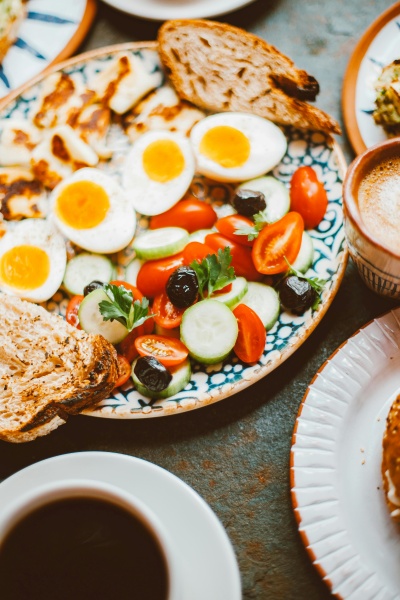
Examples of more natural options
Milk, eggs, cereal, oats, fresh fruits, vegetables and potatoes, rice, dry fruits, seeds, natural bread (from a real bakery), honey.
Not real food: our favourite snacks, tortilhas, cookies, chips, cakes, buns, etc.
And these are exactly the ones that are the hardest to quit (wonder why?)
Fridge
Food that is stored in the fridge is also a much better option, as it has a shorter expiration date, and because it’s in the fridge, it usually has fewer ingredients, which means less of the bad stuff.
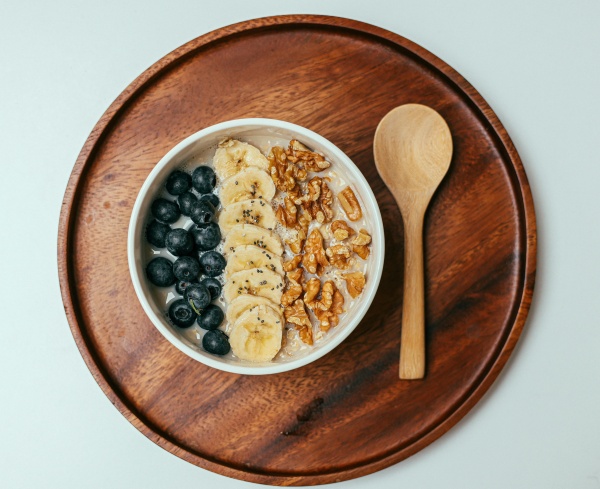
Step 2 – Replace, don’t remove
To start, go really slow.
Replace:
- Cookies/snacks with fridge-based desserts (yogurts, ice creams, same-day baked sweets), nuts, seeds, and fruits
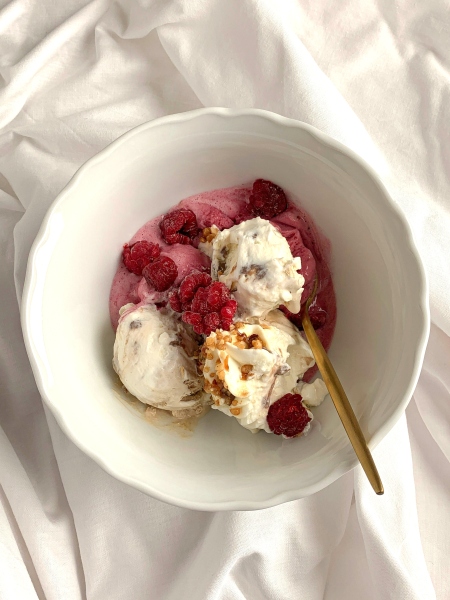
There is a simple rule to follow at all times:
Fewer ingredients + shorter shelf life = better for your health
Do this for weeks and months.
Slowly adapt your body to the new change. This doesn’t have to be a strict thing. Just gradually reduce the snack frequency, in your own time.
Step 3 – Control timing
Next step:
After you get used to not eating highly processed snacks, introduce your sweet cravings only at certain times of the day – after big meals.
- After lunch
- After dinner
Why? Your stomach is already prepped with food, so there is less sugar and fewer harmful chemicals hitting your body straight away.
And you still know you’ll get that sweet treat after the meal, and it’s going to be a “real” sweet like a nice ice cream or chocolate yogurt, instead of a pack of processed cookies on an empty stomach that will make you feel bloated, numb and cause you sugar spikes followed by crashes.
Step 4 – Natural adaptation
After a while, your sugar cravings will drop to a much more sustainable level.
Your body will cleanse itself and adapt to eating healthier alternatives, and when you eat processed foods again, your body will feel it, and it won’t like it.
You will quickly realise that most processed foods have:
- Too much sugar
- Too much salt
- Artificial ingredients that make you feel tired, sick, and low on energy
Step 4 – Real food shift
- Buy real meat
- Buy whole fish.
- Avoid overly processed versions
If frozen:
- Check if it’s real or reshaped. You should be able to see the entire fish, not in cubes or with mixed ingredients or in packages.

Step 6 – Remove bad habits
Avoid anything with long expiration dates:
- shelf snacks
- juices that have little to no natural ingredients
- “healthy snacks” that have dozens of ingredients
- packaged bread
- excess soy
- frozen packaged meat or fish with no real shape
To prep the food:
- Stove, oven, air fryer – food should be properly heated.
- remove microwaves
What you eat is only part of the picture. It is also worth reviewing the everyday kitchen items you use to prepare and store your food.
Final message
Sticking to these simple rules will be a journey, no doubt. But if you commit, you will become a healthy person for life.
Not temporarily, not just for summer – but for life.
You will have more energy, feel lighter, prevent health issues from even starting.
The only thing that matters is when you reach that moment when you realise that much of the food you used to eat was actually harming you.
Once you see, you can’t unsee it.
And the real question is not if – but when. And there is no rush.
Stay healthy, stay curious, and remember: this journey is hard and long, but only these journeys pay off in the end. The rest is just noise and diverting you from the real path.