
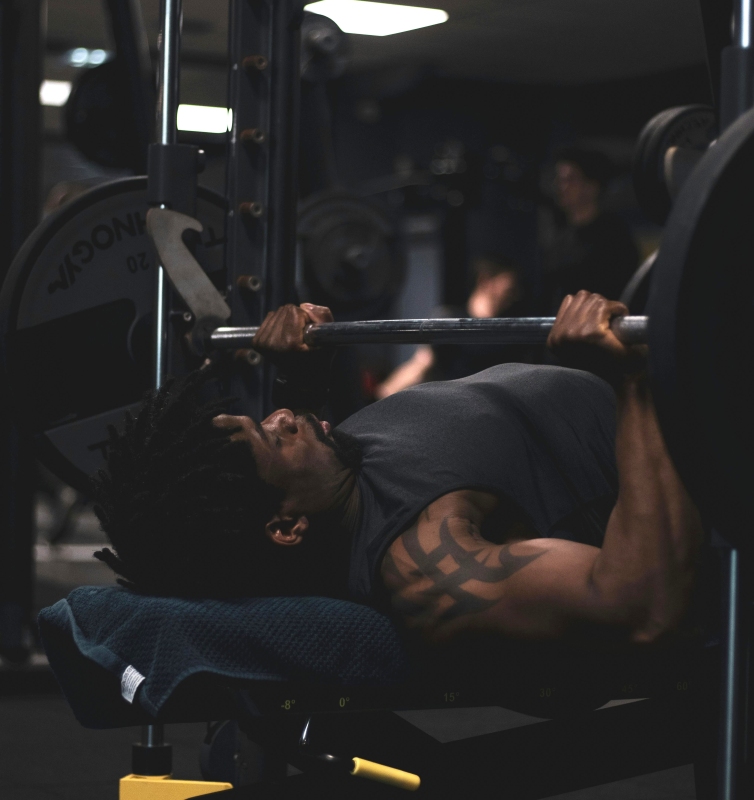
You might be getting stronger – but also more restricted, stiff, and injury-prone without realising it
Most people think that going to the gym is enough to become a healthy human being.
But most people don’t realise they are building a body that looks strong but can’t move properly.
They lift weights, follow routines, and assume they are doing everything right, when in reality, they are only developing part of their body.
Strength alone is not enough. And before strength even becomes relevant, many people struggle to build a gym routine they can maintain beyond the first few weeks.
Only training specific parts
If you only lift weights, you are training in isolation.

But your body is not made of muscle alone. It also includes ligaments, tendons, and fascia. These are essential for stability, movement, and injury prevention.
If you ignore them, you become strong – but limited.
The problem: treating the body like a machine
Most people treat their body like a machine made of isolated parts.
They train:
• chest
• arms
• legs
And treat food as if it’s only protein, carbs, or fat.
But the body doesn’t work like that.
Food is often treated as another collection of numbers rather than a long-term behaviour. That same oversimplification is one reason people struggle to build healthy eating habits that last.
Every movement involves balance, coordination, and flexibility.
Even simple actions in the gym – like picking up weights, adjusting equipment, or stabilising your body – require full-body integration.

So you are never truly isolating anything. It’s a myth.
Why lack of mobility becomes a problem
If you have poor mobility:
• your range of motion is limited
• your movements become inefficient
• your risk of injury increases
When everyday movement becomes more difficult, physical tasks demand more effort and can contribute to the feeling that you have no energy left.
And the problem usually shows up when:
• you move unexpectedly or too fast
• you lose balance or are too exhausted
• you stretch beyond your current capacity
That’s when injuries happen.
4. The missing piece: mobility and stretching
Most people skip stretching completely.
They either:
• don’t warm up
• or warm up only on machines
But mobility is what allows your body to:
• move freely
• stay stable
• handle real-life movements

Without it, you are building strength on a restricted base, conditioning your body to only perform very specific movements.
Simple mobility exercises to start with
You don’t need anything complex. Start simple with dynamic mobility exercises that wake up your body.
With consistency, you will notice your flexibility improving over time.
Mobility follows the same rule as strength: occasional extreme effort matters less than a simple practice you can repeat. Discipline becomes more reliable when the routine is realistic.
1. Wall rotation stretch
Stand against a wall with your legs shoulder-width apart.
Rotate your torso from left to right.
Progress by trying to touch the wall behind you with your hands.
2. Back stretch (wall support)
Raise your hands above your head and gently lean backwards.
Use the wall for support.
The further you are from the wall, the deeper the stretch.
3. Side bends
Stand with your legs shoulder-width apart.
Keep your arms straight and bend left and right.
Try to reach your knee with your hand.
4. Toe touch (hamstring stretch)
Keep your legs straight and try to touch your toes.
If you can’t reach, slightly bend your knees and hold the back of your legs.
Gradually bring your torso closer to your legs.

5. Full body circles (good morning movement)
Stand with your legs wide apart.
Keep your arms overhead.
Bend sideways and move your torso in slow circular motions.
6. Dynamic leg movements
Standing knee raises, front kicks, and controlled knee drives.
You can also open the hips with deep squats followed by light squats.
Core idea
Lifting weights makes you stronger.
But mobility allows you to actually use that strength.
Without mobility, your body becomes strong – but restricted.
What you should do
Before exercising, start with dynamic mobility exercises to warm up your entire body – especially your spine, back, and lower back, as these are essential for posture and movement.

Then move into more specific warm-ups depending on the muscles you will train.
If you are training the whole body, focus on warming up everything – not isolating.